 English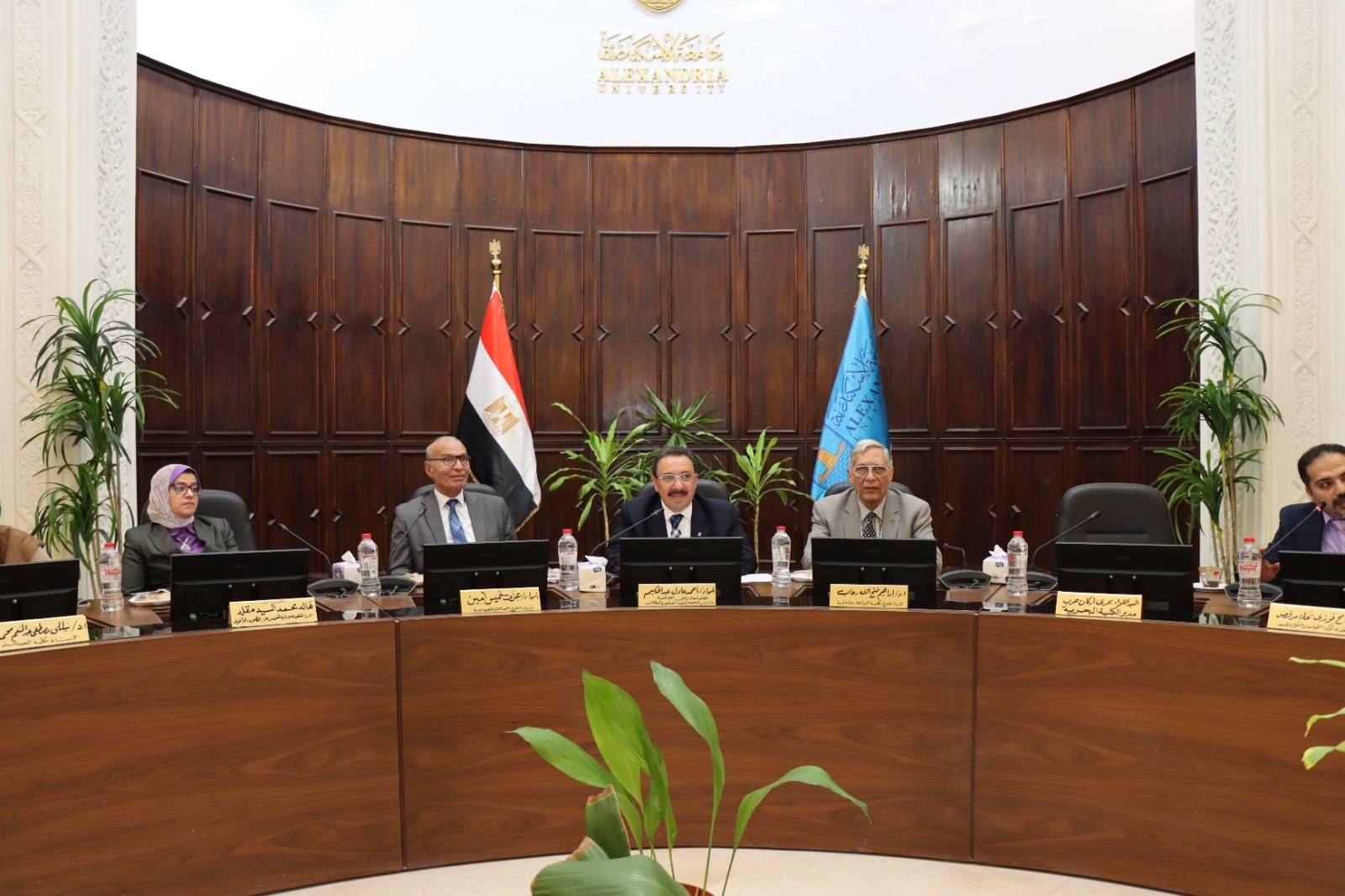
The Education and Student Affairs Council at Alexandria University held its meeting this Monday morning, April 20, chaired by Professor Dr. Ahmed Adel Abdel Hakim, Acting President of the University and Vice President for Education and Student Affairs, to discuss several files related to the progress of the educational process and the regularity of studies across various colleges.
During the meeting, the Council reviewed the Supreme Council of Universities' decision regarding the approval of the academic calendar for the 2026/2027 academic year, emphasizing full commitment to it to ensure the stability of the educational process and achieve academic discipline.
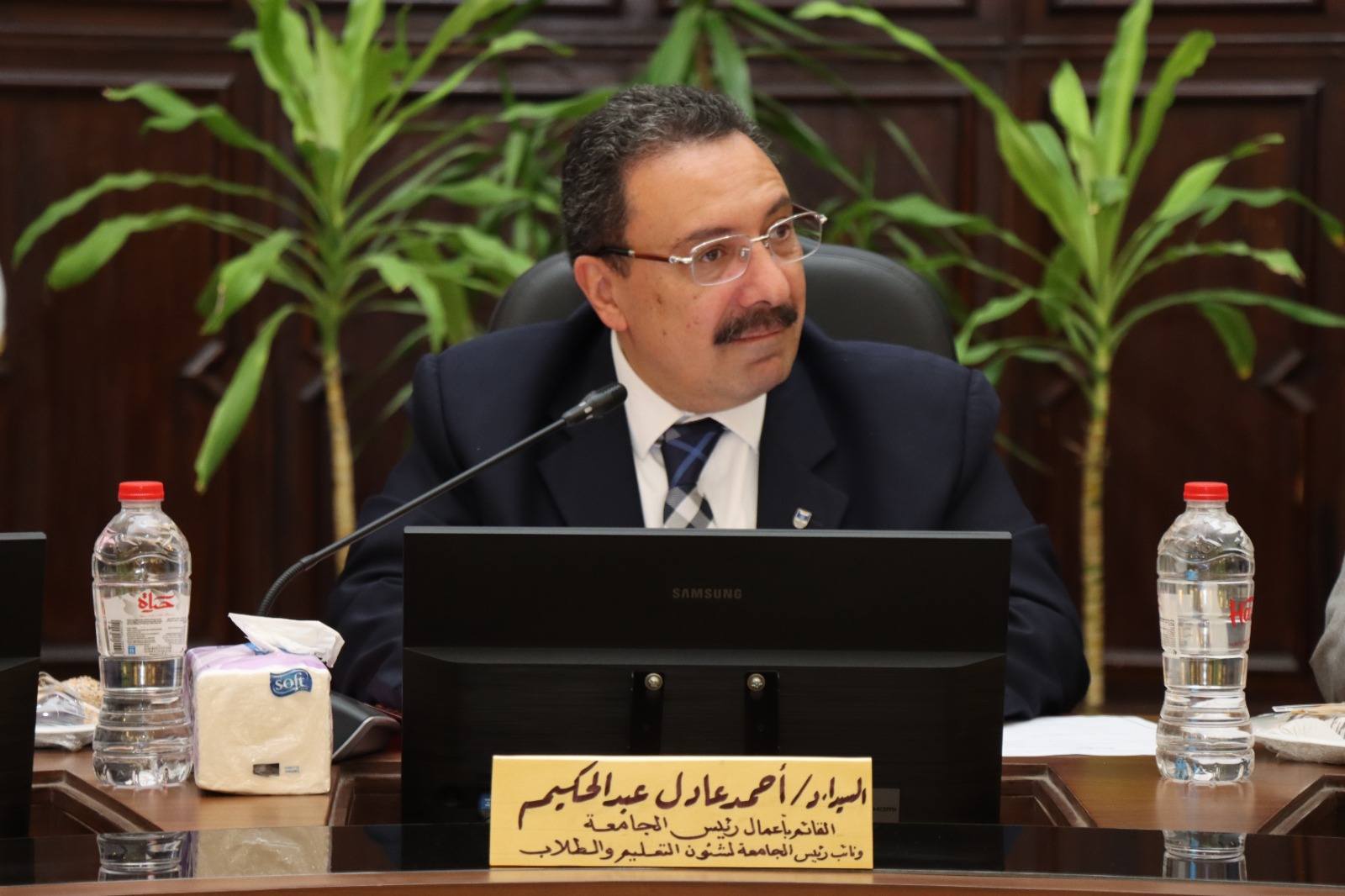
Professor Dr. Ahmed Adel Abdel Hakim stressed the necessity for colleges to promptly complete the Egyptian Student Survey (ESSE) for final-year students, given its importance as a vital tool for supporting decision-makers and improving institutional performance and the educational experience. He noted that registration is available via the following link: https://esse.scu.eg
In a related context, the Council praised the university’s significant progress in digital transformation and automation systems, particularly the Alexandria University Electronic Student Platform, which has been efficiently activated to serve approximately 170,000 students. This reflects the development of the university’s technological infrastructure. The Council pointed out that the platform now includes a suite of vital services, such as university housing services, medical service bookings for staff and students, services from the University Centers for Career Development (UCCDs), youth welfare activities, and services from the Student Guidance and Counseling Center.
Furthermore, a "Chatbot" has been provided to respond to inquiries regarding regulations and support academic advising within colleges.
The Council also highlighted the qualitative shift the university is witnessing in this regard, in light of the expansion of providing smart and integrated educational services via digital platforms.
Additionally, the Council noted the remarkable growth in digital scientific content, with the number of electronic books available on the platform reaching 1,188. Several colleges have also succeeded in making their curricula available electronically by 100%, supporting the university’s trend toward sustainable digital education.
The Council concluded by reaffirming the university's ongoing efforts to develop the educational services system and enhance the digital transformation path, contributing to the improvement of the quality of the educational process and meeting students' needs.